Dr. Vitka's Files
The Carnival Skeleton
A travelling carnival, a displayed skeleton and a family who wanted it back. How human remains ended up in a sideshow.
In the nineteenth and early twentieth centuries, travelling carnivals and dime museums displayed human remains as curiosities: mummies, shrunken heads, "giants," and skeletons labelled with a story. Most of those remains were acquired without consent, and some of them were never returned.
How the trade worked
Medical schools, anatomical suppliers and private collectors formed a market that stretched from university hospitals to circus sideshows. A skeleton could be prepared, articulated and sold, and the paperwork — where it existed — rarely recorded who the person had been.
New England was part of this trade. Salem, with its port, its medical connections and its appetite for spectacle, was not exempt.
The Salem claim
Local accounts describe a carnival that passed through Essex County carrying a skeleton said to be that of a Salem man, displayed for decades, and eventually traced by a family who wanted him buried. The details vary between tellings: the name, the year, the carnival's route.
What is consistent is the shape of the story: a person who died poor or unclaimed, a body that became an object, and a family that spent years trying to undo it.
Why these stories matter
Because they are not ghost stories, though they get told as ones. They are about consent and dignity — the same questions that surround museum collections, medical specimens and the display of human remains today.
Salem's own institutions have had to answer those questions. The Peabody Essex Museum, like every museum with a nineteenth-century collection, has spent the last thirty years reviewing how its material was acquired.
The uncanny part
People who work with old human remains describe a particular discomfort that has nothing to do with ghosts: the sense of a person who did not consent to being looked at. That feeling is not supernatural. It is the ordinary human response to a boundary being crossed.
It is also, in Salem, a useful corrective. The city sells death as entertainment. Every so often something reminds it that the dead were people.
Hear it on the walk
The carnival skeleton story is one of the case files Dr. Vitka tells on the Spellbound Tour, alongside the resurrectionists, the vampire panic and the 1692 records. It runs nightly from the Revere Bell at the Salem Visitor Center, from $28, all ages.
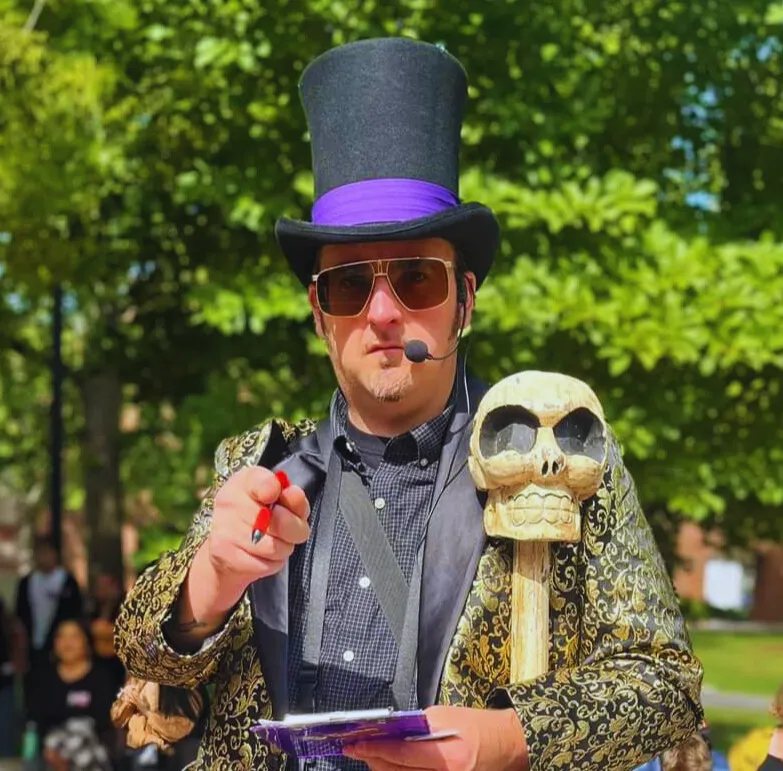
Dr. Vitka is a Salem historian, licensed city guide and professional paranormal investigator. He leads the Spellbound Tour nightly and hosts the Spellbound podcast.
Keep reading
Reserve your place
Walk these stories in person.
The Spellbound Tour runs nightly from the Revere Bell at the Salem Visitor Center. From $28, all ages, rain or shine.
Nightly tours · All ages · Rain or shine · (978) 740-1876