
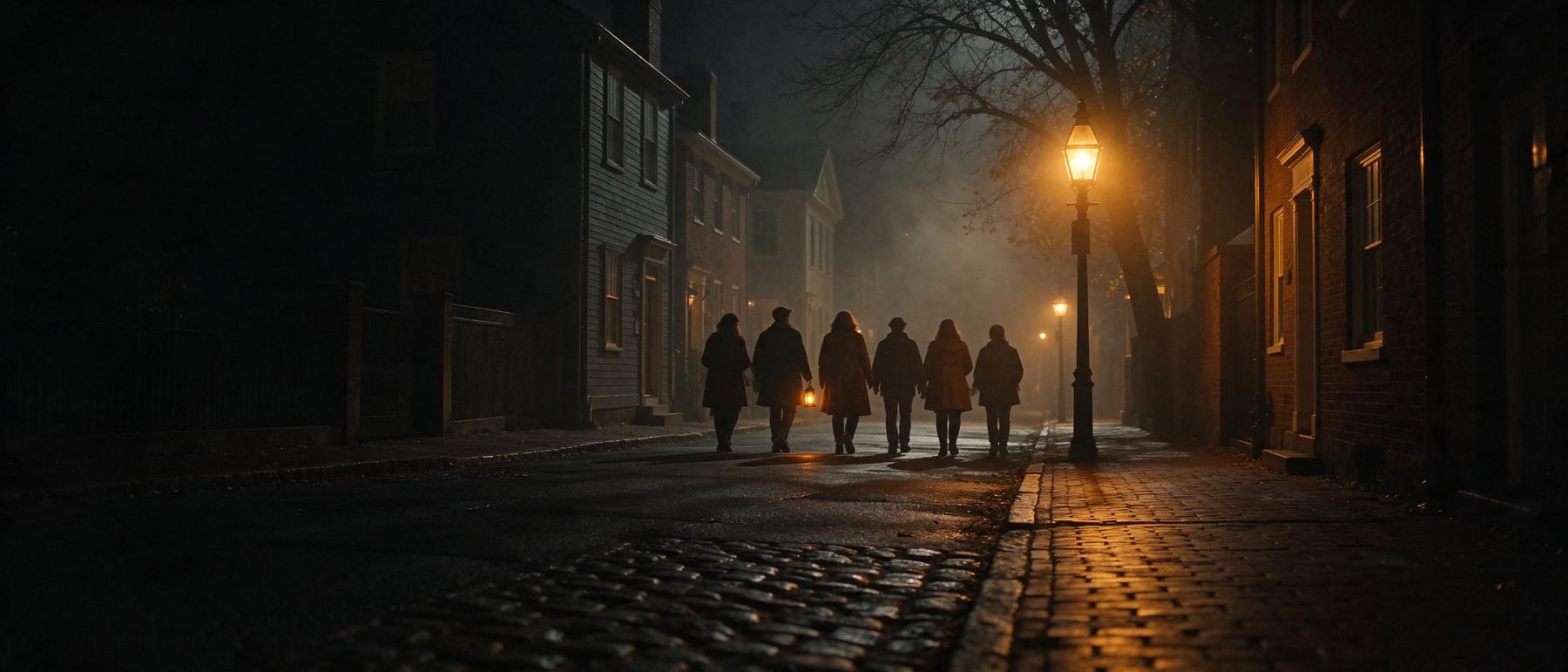
The Tour
Let Our Haunted Tour Show You Salem's History
Salem is not a haunted house. It is a working city with a documented past — and the best way to understand it is on foot, after the shops close.
Most visitors meet Salem on Essex Street at two in the afternoon, between a fudge shop and a T-shirt rack. It is a strange introduction to a city that was, for a brief period in the eighteenth century, one of the richest ports in English North America — and that hanged nineteen of its own residents in a single year.
The Spellbound Tour exists because that gap between the souvenir version and the documented version is where the interesting material lives. Ninety minutes on foot, nine stops, one guide. No bus, no queue, no costumed actors.
What a walking tour can do that a museum cannot
A museum tells you what happened. A walk shows you where. When you stand in an ordinary field near downtown and learn that an eighty-year-old farmer was pressed under stones there for two days because he would not enter a plea, the fact stops being a paragraph and becomes a place. Salem is full of those places, and most of them are unmarked.
That is the argument for walking: the city itself is the exhibit, and the distances between the stops are part of the story. The jail was here. The courthouse was there. The judge is buried a quarter of a mile away under a stone that says nothing about what he did.
Three histories in one night
The tour follows three threads, because Salem's strangeness did not begin or end in 1692.
- The witch trials. Who was accused, who signed the warrants, what evidence was accepted, and where the executions actually took place. The last question is still argued over, and the tour is honest about it.
- New England vampirism. Decades before Salem became a horror destination, rural families were exhuming their own dead. The folklore is documented, specific and much stranger than the film version.
- The Voodoo connection. Tituba, the enslaved woman whose testimony helped ignite the hysteria, came to Salem from Barbados. What she brought with her is the thread most tours leave out.
Why the guide matters more than the route
You can walk the same streets with a pamphlet. What changes the experience is having someone who has investigated the buildings, interviewed the people who work in them, and is willing to tell you when a famous story does not hold up.
Dr. Vitka has been doing that work in Salem since 2000. He is licensed by the City of Salem, trained under the parapsychologist Mollie Stewart, and has researched Voodoo practice in the Louisiana bayous. When he tells you a building has a case, it is because he has spent time in it.
What to expect on the night
The group meets at the Revere Bell in front of the Salem Visitor Center and walks a loop through downtown, finishing back where it started with a review of guest ghost photographs. The pace is conversational. Children are welcome. Tours run rain or shine, and October is the busiest month of the year by a wide margin.
Bring a camera, wear shoes you can stand in, and come with questions. The best nights are the ones where the group argues about the evidence on the way to the next stop.
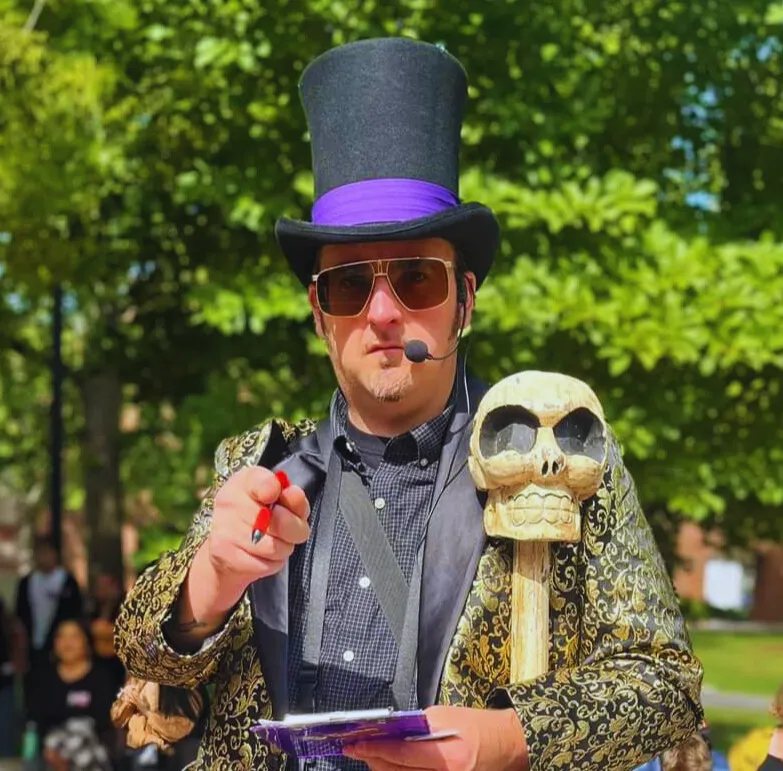
Dr. Vitka is a Salem historian, licensed city guide and professional paranormal investigator. He leads the Spellbound Tour nightly and hosts the Spellbound podcast.
Keep reading
Reserve your place
Walk these stories in person.
The Spellbound Tour runs nightly from the Revere Bell at the Salem Visitor Center. From $28, all ages, rain or shine.
Nightly tours · All ages · Rain or shine · (978) 740-1876