
Salem History
Graveyard Magic in Salem
Salem's oldest burying ground, opened in 1637, holds a Mayflower passenger, a hanging judge and three centuries of gravestone folk art.
The Old Burying Point on Charter Street is the oldest cemetery in Salem, opened in 1637, and one of the oldest continually used burying grounds in New England. It is also the most visited graveyard in Massachusetts outside of Boston, which creates a strange tension: a place built for quiet is now on every itinerary.
Go early. Read the stones. There is more information carved into them than in most museums.
The stones are instructions
Early New England gravestones were not sentimental. The winged skull — the "death's head" — was a reminder, not a decoration: you will die, and soon. The hourglass, the crossed bones, the coffin and the pickaxe all carried the same message.
By the mid-eighteenth century, the skull had softened into a winged soul effigy, and the inscriptions had turned from warning to consolation. You can read the change in belief in a single row of stones.
Judge John Hathorne
The most visited grave in Salem belongs to the man most people would prefer to forget. John Hathorne was a magistrate during the trials, the only judge who never expressed remorse, and the ancestor whose memory Nathaniel Hawthorne spent a career working through — starting with the addition of a "w" to the family name.
The stone records his name, his dates and his family. It says nothing about 1692. That silence is the most eloquent thing in the cemetery.
Richard More
Buried here is Richard More, one of the Mayflower passengers, who arrived as a child in 1620 and lived a long, difficult and litigious life in Massachusetts. His stone is a reminder that Salem's history begins before the trials and extends well beyond them.
Graveyard magic
New England folk practice treated graveyards as places of power. Dirt from a grave was carried for protection; stones were turned or marked; certain graves were visited for specific requests. Some of that practice survives in modern Salem, and you will see coins, stones and small offerings on particular graves.
The cemetery asks visitors not to leave items that can blow away. The city asks the same. Whatever your tradition, the ground is still consecrated and still in use.
The Witch Trials Memorial
Next to the burying ground is the Witch Trials Memorial, dedicated in 1992: twenty stone benches set into a wall, one for each person killed, inscribed with their last words. It is the quietest place in Salem and the one most worth your time.
Visiting
The Old Burying Point is open during daylight hours and is free. It is a stop on the Spellbound Tour, which explains the iconography, the Hathorne grave and the memorial before moving on. The walk runs nightly from the Revere Bell at the Salem Visitor Center, from $28.
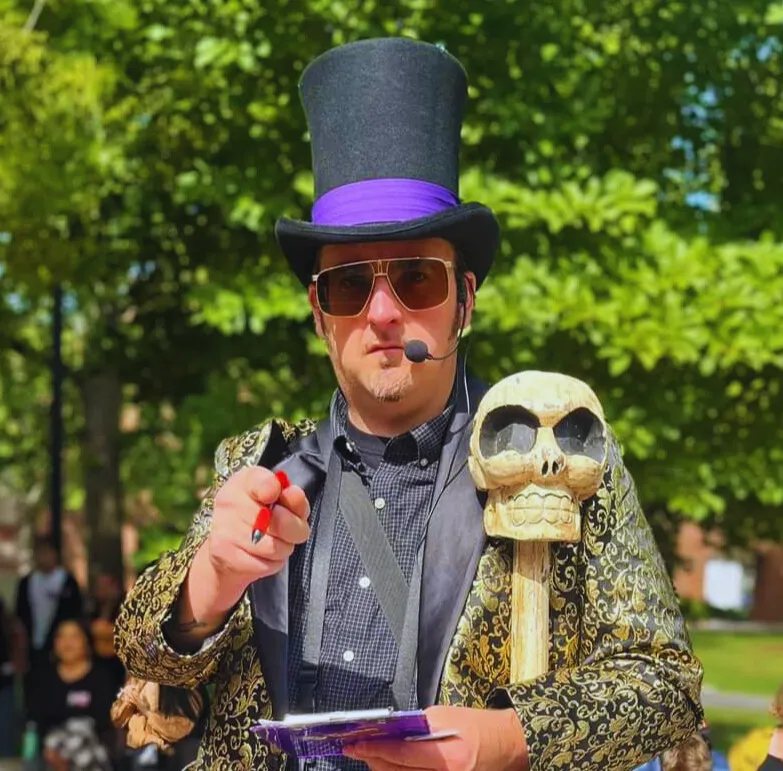
Dr. Vitka is a Salem historian, licensed city guide and professional paranormal investigator. He leads the Spellbound Tour nightly and hosts the Spellbound podcast.
Keep reading
Reserve your place
Walk these stories in person.
The Spellbound Tour runs nightly from the Revere Bell at the Salem Visitor Center. From $28, all ages, rain or shine.
Nightly tours · All ages · Rain or shine · (978) 740-1876